

You put on the jeans that fit on Monday and by Friday night they are staging a protest. Sound familiar. Bloating is one of the most common things women deal with and one of the most misunderstood, so let us clear it up.
The first thing to know is that a bloated stomach is almost never fat. It is your digestive system holding on to gas and water, and it comes and goes. Understanding why makes it so much less stressful, and a lot easier to fix.
what bloating actually is
Bloat is that tight, full, puffy feeling when your belly expands, usually after eating. Most of the time it is gas produced as your gut bacteria break down food, plus water your body is holding on to. When digestion slows down, that gas and water hang around longer and you feel it.
The good news hiding in there is simple. If bloat is mostly a traffic problem in your gut, then anything that keeps things moving smoothly is going to help.
the usual suspects
- Eating too fast. Inhaling lunch between meetings means you swallow air and give your gut a big job all at once.
- Salt and processed food. A salty day makes your body hold extra water, and hello puffiness.
- Fizzy drinks. Carbonation is literally gas going straight into your stomach.
- Your cycle. The week before your period, shifting hormones make you retain more water and slow digestion down.
- Not enough water. Counterintuitive but true. When you are dehydrated your body clings to water even harder.
what actually helps a bloated stomach
Slow the whole thing down
Digestion starts in your mouth. Chewing properly and eating without your phone in your other hand gives your gut a head start and means you swallow less air. It sounds too simple to matter. It matters more than almost anything else on this list.
Drink more water, walk after meals
Water keeps everything moving and helps flush out the sodium making you puffy. A gentle ten minute walk after eating is one of the most underrated debloat tricks there is, because movement physically helps gas move through instead of sitting there.
Lean on ginger and peppermint
These two have been settling stomachs for centuries for a reason. Ginger helps your stomach empty a little faster, and peppermint helps relax the gut so trapped gas can pass. A warm ginger tea after a big meal is a genuinely lovely habit.
Build fibre up slowly, add enzymes
Fibre is great for your gut long term, but pile it on overnight and you will bloat more, not less. Ease it in. And when a meal is heavy, digestive enzymes help break food down more completely so less of it ferments and turns into gas.
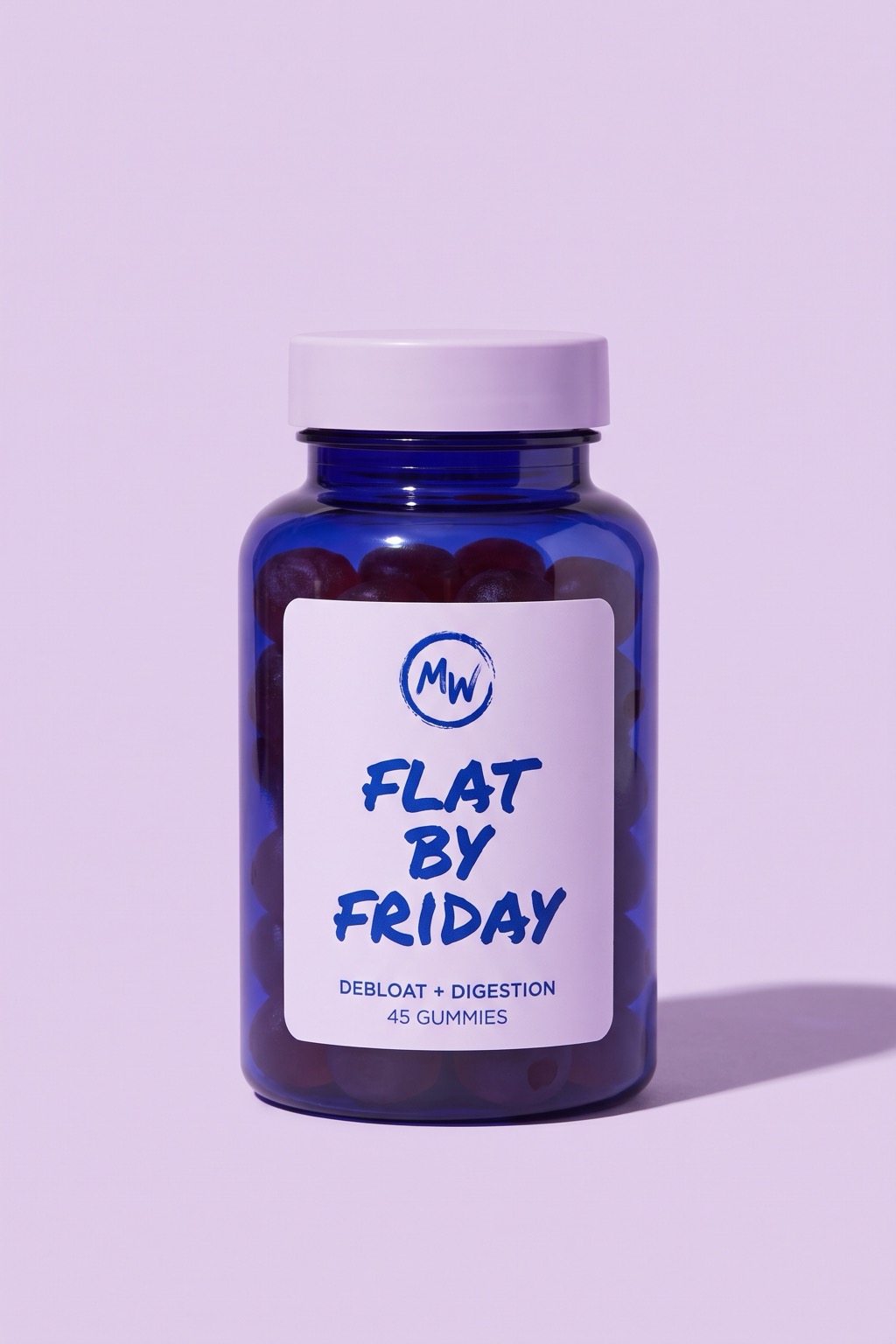
Debloat / Gut
FLAT BY FRIDAY.
Ginger plus digestive enzymes to ease the food baby before it starts.
when it is your hormones
If your bloat shows up like clockwork the week before your period, that is not in your head. In the luteal phase your body holds more water and digestion naturally slows, so you feel puffier even when nothing about your eating has changed. Being a little gentler with salt, caffeine and fizzy drinks that week can take the edge right off.
where a debloat supplement fits
You cannot out supplement a stressed, rushed, dehydrated routine, and anyone who tells you otherwise is selling you fairy dust. But once the basics are in place, targeted support makes the good days more reliable. That is the thinking behind FLAT BY FRIDAY. Ginger and digestive enzymes to help ease the food baby, taken before the meal you know is going to be a lot.
One honest note. Everyday bloat is normal. If yours is severe, painful, or just will not settle, that deserves a proper conversation with your doctor rather than another supplement.
questions people actually ask
Why do I get so bloated at night?
Bloat tends to build through the day as you eat, drink and sit. By evening you have simply accumulated more gas and water in your digestive tract. A short walk after dinner and slower eating both help a lot.
Is bloating the same as gaining weight?
No. Bloat is gas and water sitting in your gut, and it comes and goes within hours or a day. It is not fat, and waking up flat again is completely normal.
Do digestive enzymes actually help?
They can. Enzymes help break down food more completely, which means less of it sits around fermenting and creating gas. Ginger supports how quickly your stomach empties, which is why the two work nicely together.
When should I see a doctor about bloating?
If bloating is severe, painful, does not settle, or comes with other changes, get it checked by a professional. Everyday bloat is normal, a pattern that worries you deserves a real conversation with your doctor.