

If you have ever felt wired and exhausted at the exact same time, tired all day and then weirdly alert at 11pm, that is the cortisol conversation everyone is suddenly having. And for once the wellness internet is pointing at something real.
Cortisol gets talked about like a villain, but you actually need it. The goal was never zero cortisol. The goal is a healthy rhythm, high in the morning to get you going and low at night so you can rest. Modern life just keeps poking the alarm all day long, so here is what is happening and what actually helps.
first, what cortisol is for
Cortisol is the hormone your body releases to help you rise to a challenge. It sharpens focus, frees up energy, and gets you moving. In a healthy day it peaks about half an hour after you wake up and drifts down as the evening goes on. That slow fade at night is what lets your nervous system shift into rest.
The trouble starts when the challenge never ends. Back to back notifications, an inbox that reloads itself, a workout that feels like punishment, three coffees on an empty stomach. Your body cannot tell the difference between a real threat and a stressful group chat, so it keeps the alarm running. That is the stuck on feeling so many of us live in.
the signs your cortisol is stuck on
- Wired but tired. You are exhausted but your brain will not switch off, especially late at night.
- An afternoon crash. Energy falls off a cliff around 3pm and you reach for sugar or another coffee.
- Racing thoughts at bedtime. The second your head hits the pillow, the mental to do list starts.
- Cravings and a puffier middle. Ongoing stress nudges cravings for salty, sweet, quick energy foods.
None of this means anything is broken. It usually means your rhythm has drifted, and rhythm is something you can rebuild.
how to lower cortisol naturally
Eat something with protein before your coffee
Caffeine on an empty stomach tells an already jumpy system to release even more cortisol. A few bites of real breakfast first, ideally with protein, gives your body something to stand on. Even a spoon of yoghurt or a boiled egg before the espresso changes how the morning feels.
Move in a way that feels good, not punishing
Movement is a beautiful stress reliever until it tips into another stressor. If you are already running on empty, a hard hour of cardio can push cortisol higher. Walking, pilates, strength work and a proper stretch all signal safety to your body. Save the all out sessions for the days you actually feel recovered.
Get light in your eyes early
A few minutes of morning daylight, even through cloud, helps set that healthy high in the morning, low at night curve. It is the cheapest nervous system reset there is, and it makes the evening wind down easier too.
Protect the last hour before bed
This is the one most of us skip. Dim the lights, put the phone down, and give your brain a boring runway into sleep. The doomscroll is basically a cortisol drip at the worst possible time.
Give ashwagandha a real shot
This is where a supplement earns its place. Ashwagandha is an adaptogen, which is a fancy word for a plant that helps your body cope with stress instead of overreacting to it. It is one of the most studied calm ingredients out there, and unlike a lot of the aisle, the research is actually decent.
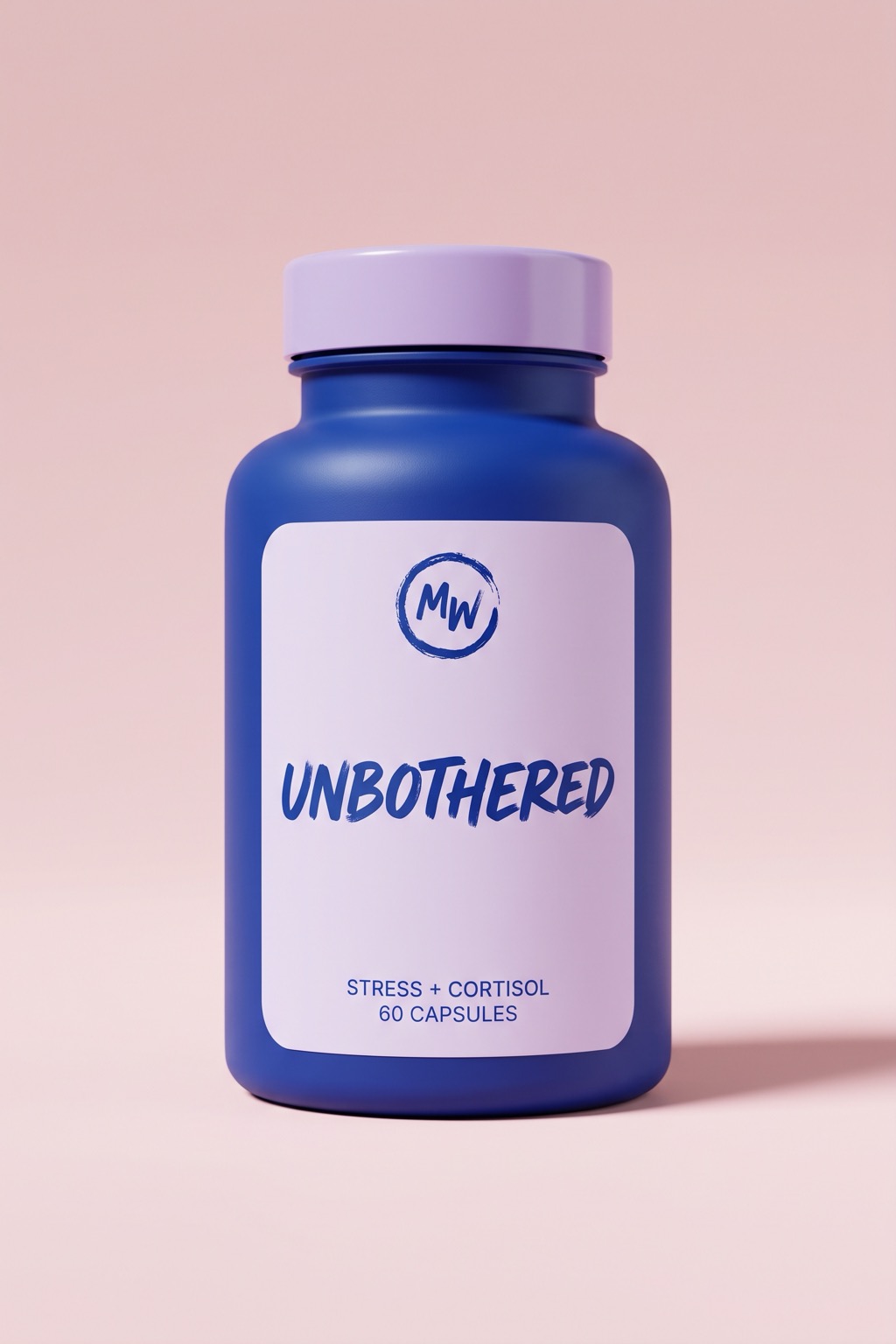
Stress / Cortisol
UNBOTHERED.
KSM-66 ashwagandha plus L theanine for calm that still shows up.
why ashwagandha keeps coming up
Not all ashwagandha is equal. The version worth looking for is a standardised extract called KSM-66, dosed around 600 mg, because that is close to what the studies actually used. A lot of products sprinkle in a tiny amount so they can write it on the label, then hope you do not check the numbers. We check the numbers.
Pair it with L theanine, the calm amino acid found in green tea, and you get steady focus without the jittery edge. That is the whole idea behind UNBOTHERED. Real doses of the calm actives, third party tested, in a bottle that looks good enough to leave on the counter.
how long before you feel different
Give it time. The lifestyle pieces start working almost immediately, you will feel a calmer evening within days of protecting that last hour. The ashwagandha builds up more slowly, with most people noticing a softer baseline around the four to six week mark. Consistency beats intensity every single time here.
If your stress ever feels bigger than tired and wired, please talk to a real human doctor. Supplements support a healthy stress response, they are not a substitute for care when you need it.
questions people actually ask
Does ashwagandha actually lower cortisol?
Research on standardised ashwagandha extracts like KSM-66 has shown meaningful drops in cortisol and lower reported stress over several weeks. It is not instant magic, it is a daily habit that helps your body handle stress a little better.
How long until I feel calmer?
Most people notice a softer edge on their stress within the first week or two, and the bigger shift tends to land around the four to six week mark once it has built up in your system.
Can I take it every day?
Yes. Adaptogens like ashwagandha are meant for daily use, and consistency is where the payoff is. If you are pregnant, nursing or on medication, check with your doctor first.
Will it make me sleepy?
It should not knock you out during the day. It is more about turning the volume down on the stress response so you feel steady, not sedated. Taking it with dinner works nicely if you like a calmer evening.